Corneal wounds and hydrogels
Coverage of a wound is a satisfyingly concrete outcome. The identity of the wounded tissue matters just as much.
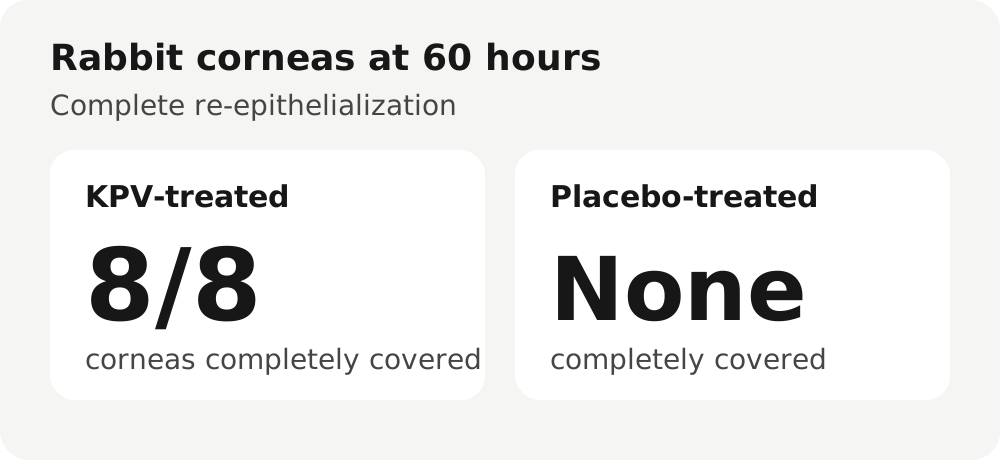
Corneal coverage at 60 hours
In a rabbit corneal wound-healing experiment, topical KPV accelerated epithelial repair. By 60 hours, 8/8 KPV-treated corneas were completely re-epithelialized, versus none of the placebo-treated corneas. The paper also included rabbit corneal epithelial cells in vitro and linked the effect to a nitric-oxide-dependent mechanism.
The task has a physical clarity I appreciate: epithelial cells covering an injured surface again. The comparison has a time and a tangible endpoint. That makes the result compelling to me within this rabbit experiment. I’m hesitant about the much broader phrase “skin regeneration”; the original task was corneal wound coverage.
A KPV-containing hydrogel
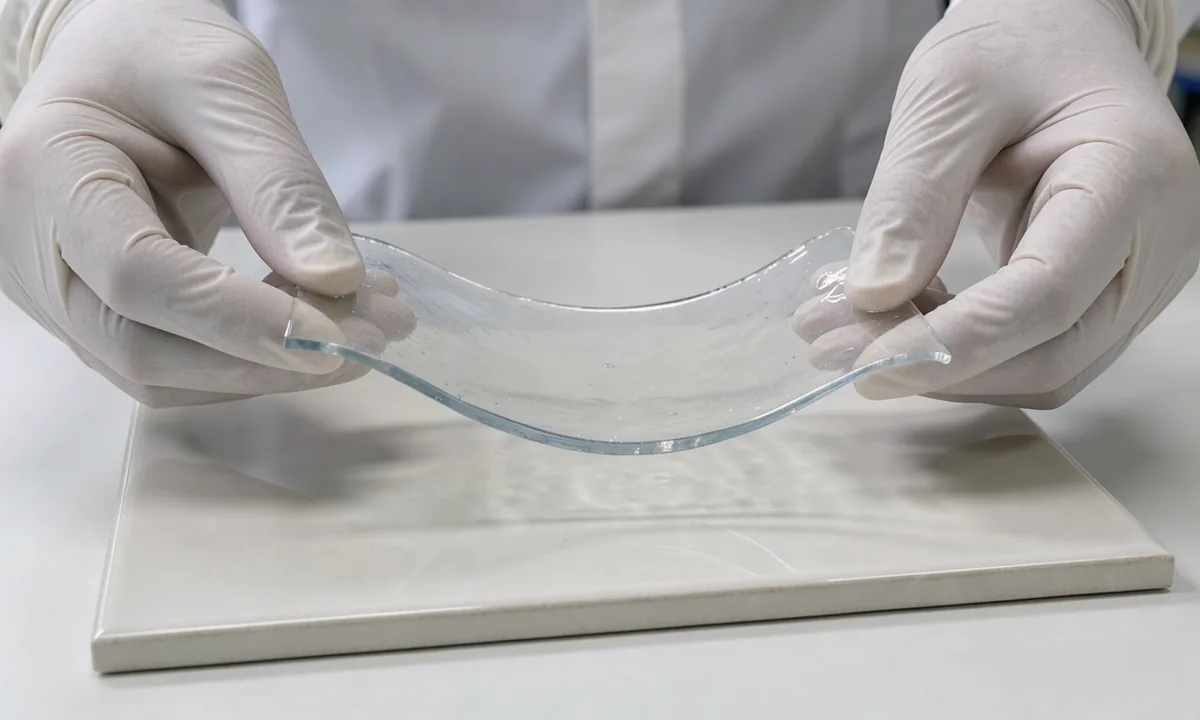
A mucoadhesive hydrogel incorporating KPV was examined in vitro and in animal wound models. The reported effects combined anti-inflammatory, antibacterial and repairing activity at the application site. Mucoadhesive means that the material adheres to a mucosal surface; the formulation is central to the experiment being described.
Here my fussiness about nouns pays off. “A hydrogel containing KPV” tells me more than “KPV heals wounds”, because it preserves the preparation that was actually studied. I’d reserve the credit until a comparison separated the contributions of the material and peptide. That is a question about attribution, not a finding that this account can supply.
A review of melanocortin peptides in cutaneous wound healing considers KPV among candidate therapeutics with anti-inflammatory and pro-repair actions. The review widens the discussion to skin wounds, while the rabbit experiment supplies the particular result above.
The wider possibility has my sympathy, provided the concrete experiments retain their names: a rabbit cornea, a KPV-loaded material, a review of candidate approaches. For a further step, I’m looking towards human skin outcomes and tolerability with a specified preparation. Neither enthusiasm for repair nor an appealing photograph can answer it. The reading list gathers these distinct lines of work without treating them as interchangeable.